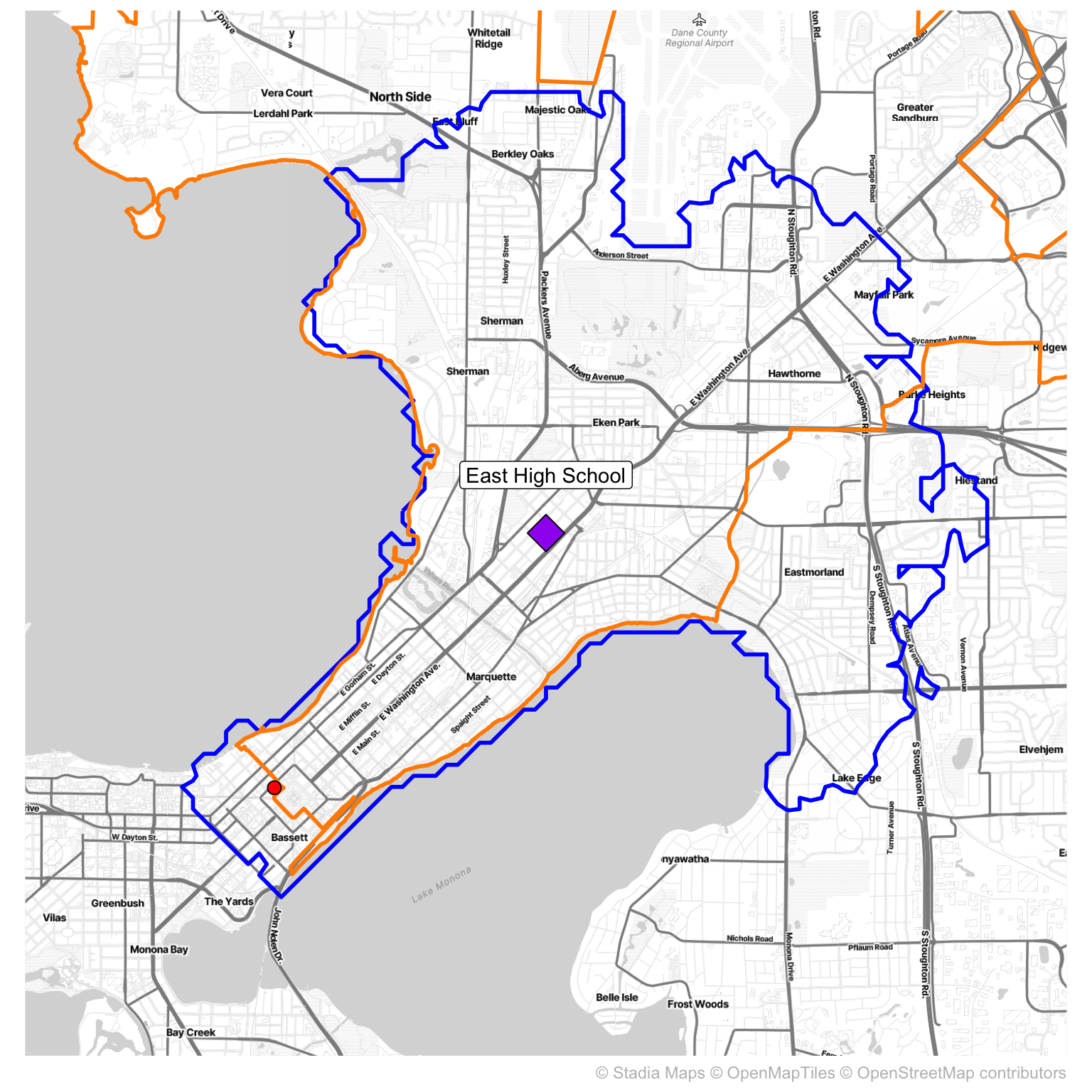
Using OpenStreetMap data to assess the bikeability of schools


Harald Kliems 
UW–Madison Prevention Research Center
UW–Madison School of Medicine and Public Health, Dept. of Pediatrics
Samuel Younkin
UW–Madison Nelson Institute for Environmental Studies
Link to the slides

https://haraldkliems-sotmus-2026.share.connect.posit.cloud/
Census data and grid cells
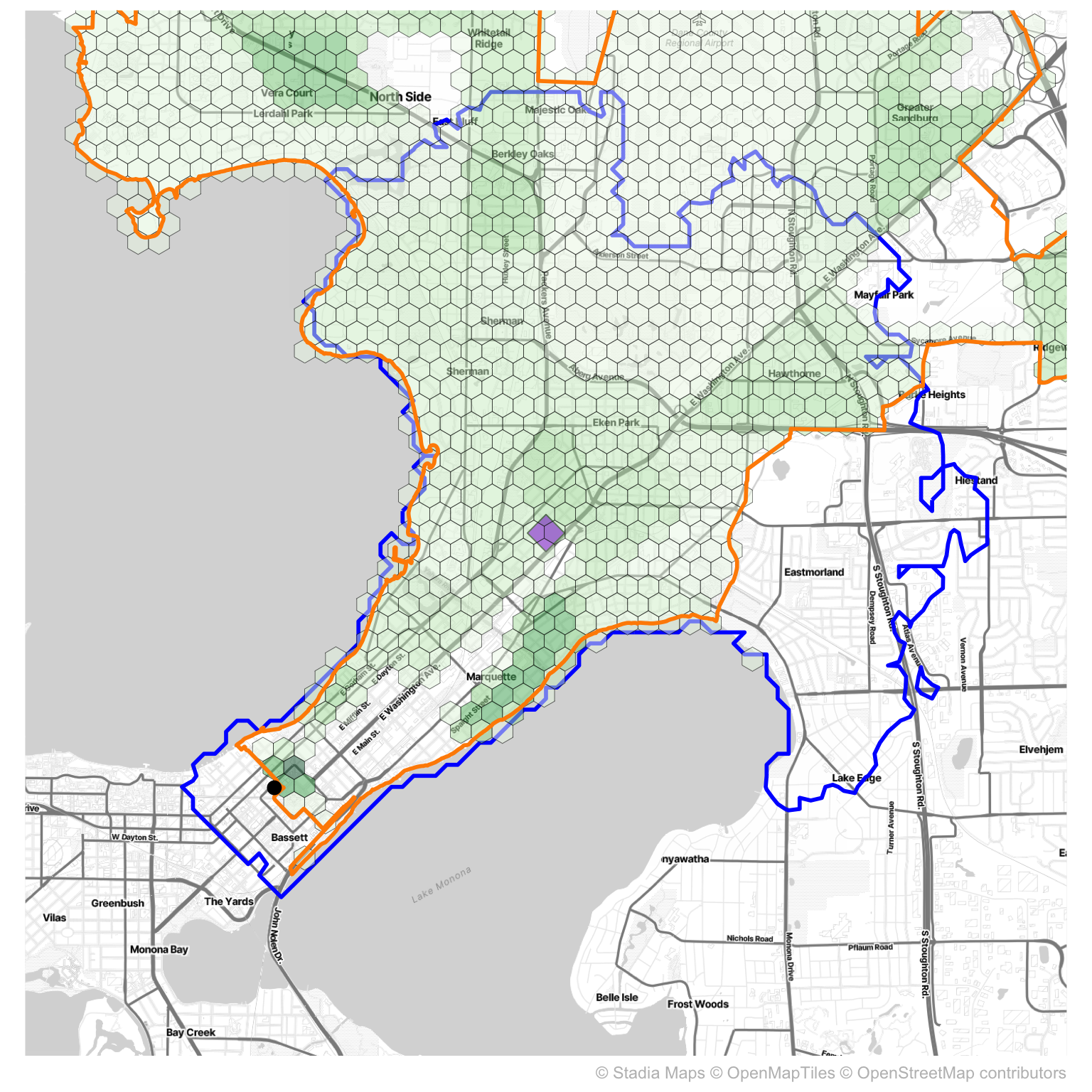
- Student population from American Community Survey
- Uses bike and attendance areas to “assign” cells to schools
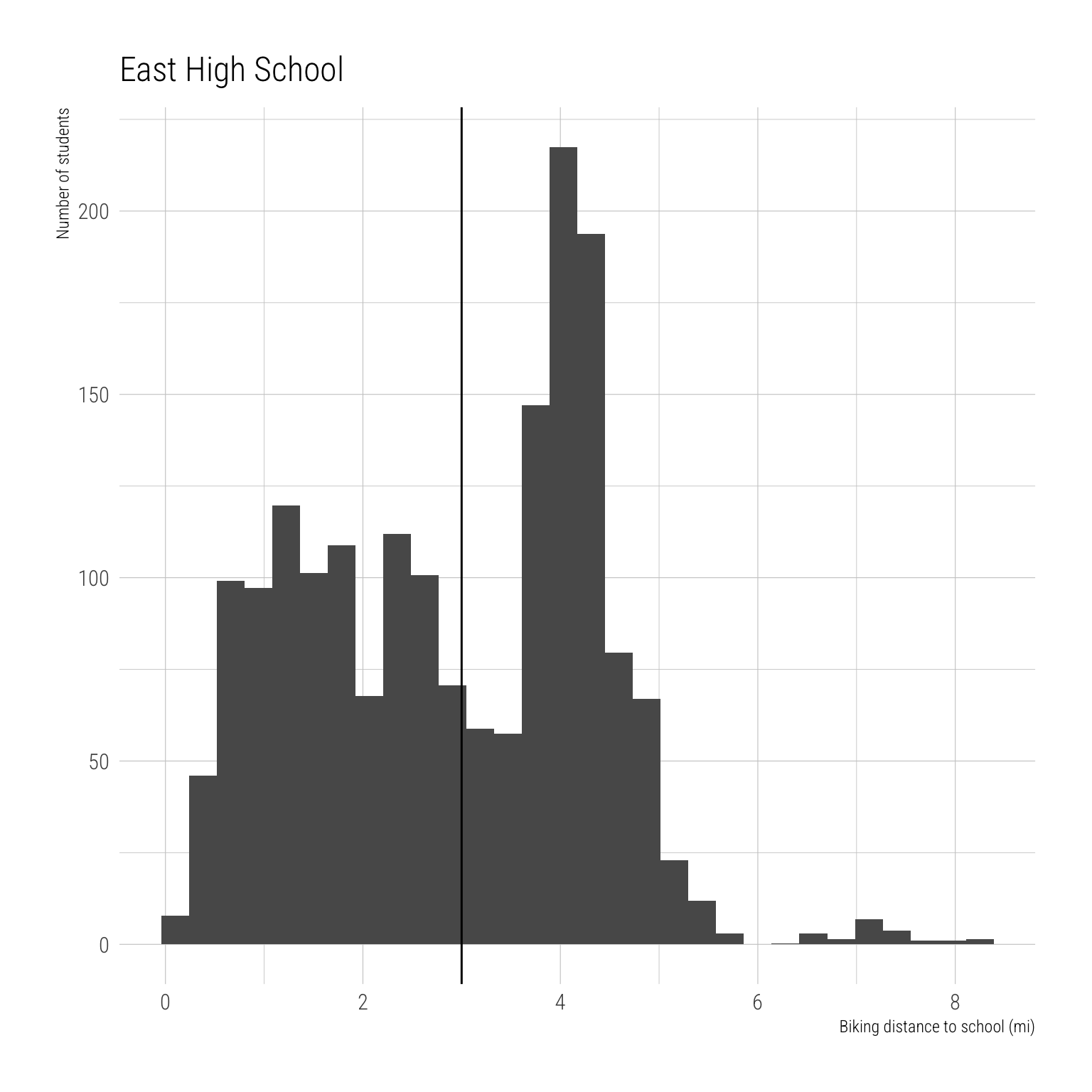
Zooming in
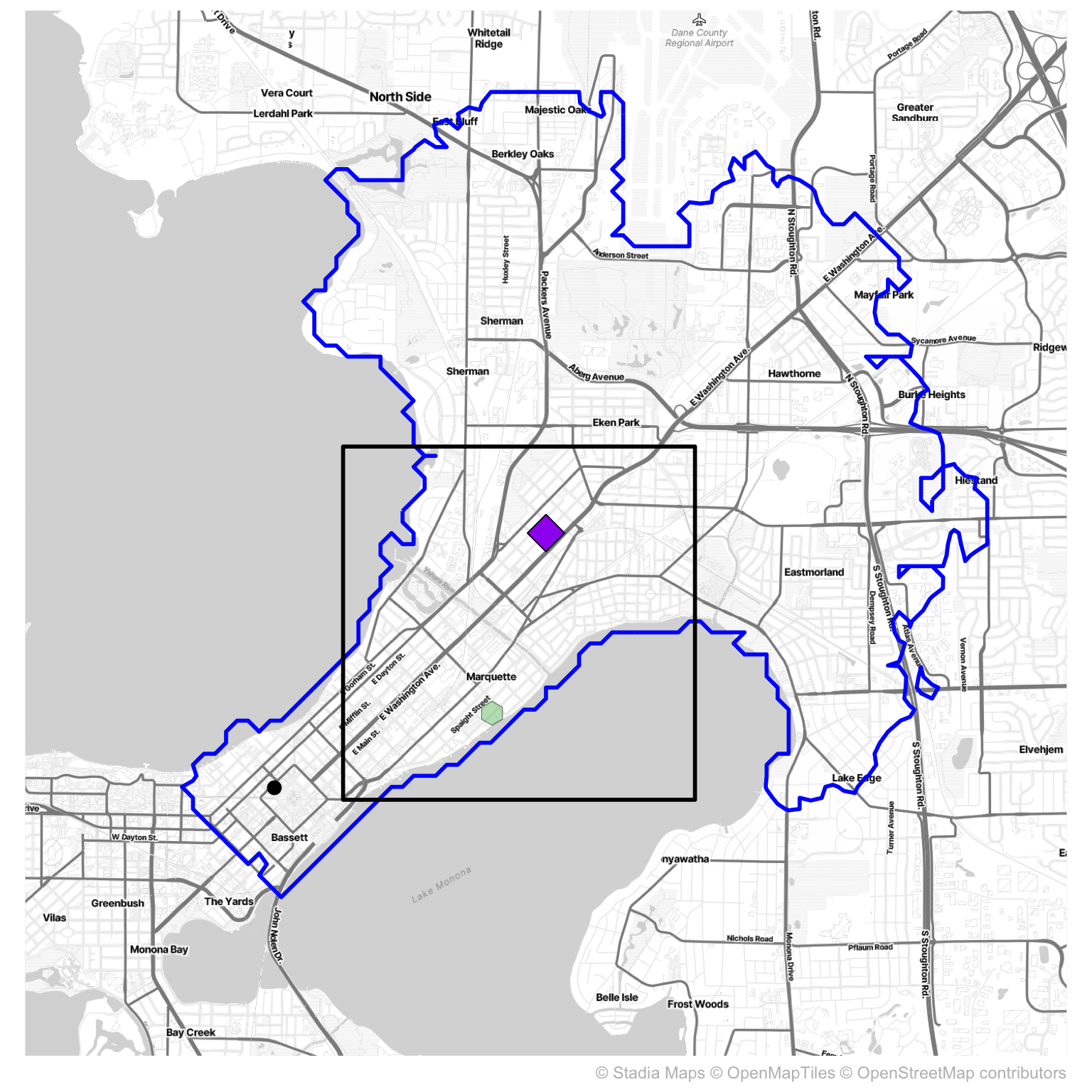
Routing with BRouter
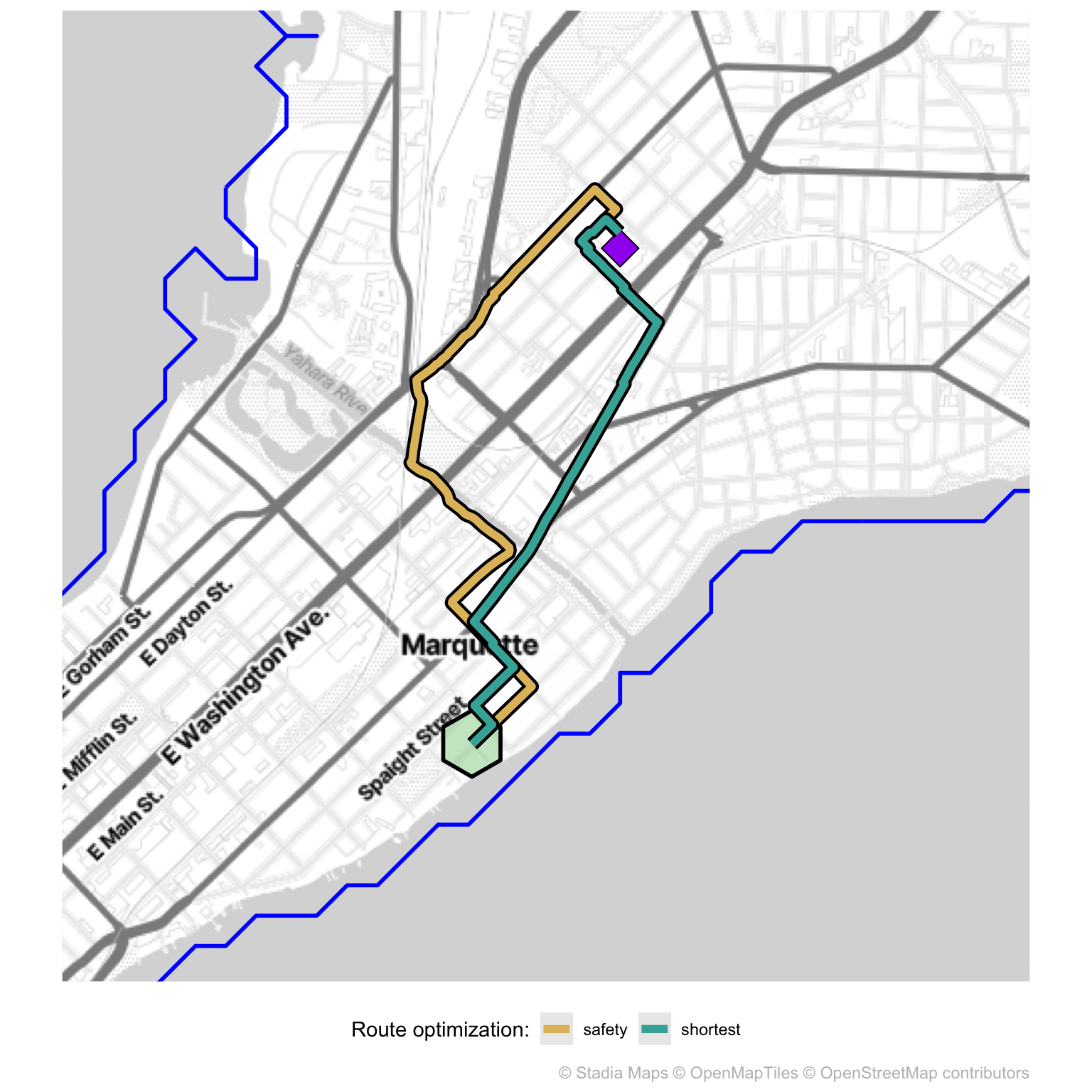
- Routing with BRouter
- Calculate routes with two profiles:
safety&shortest
Traffic stress with BrokenSpoke Analyzer
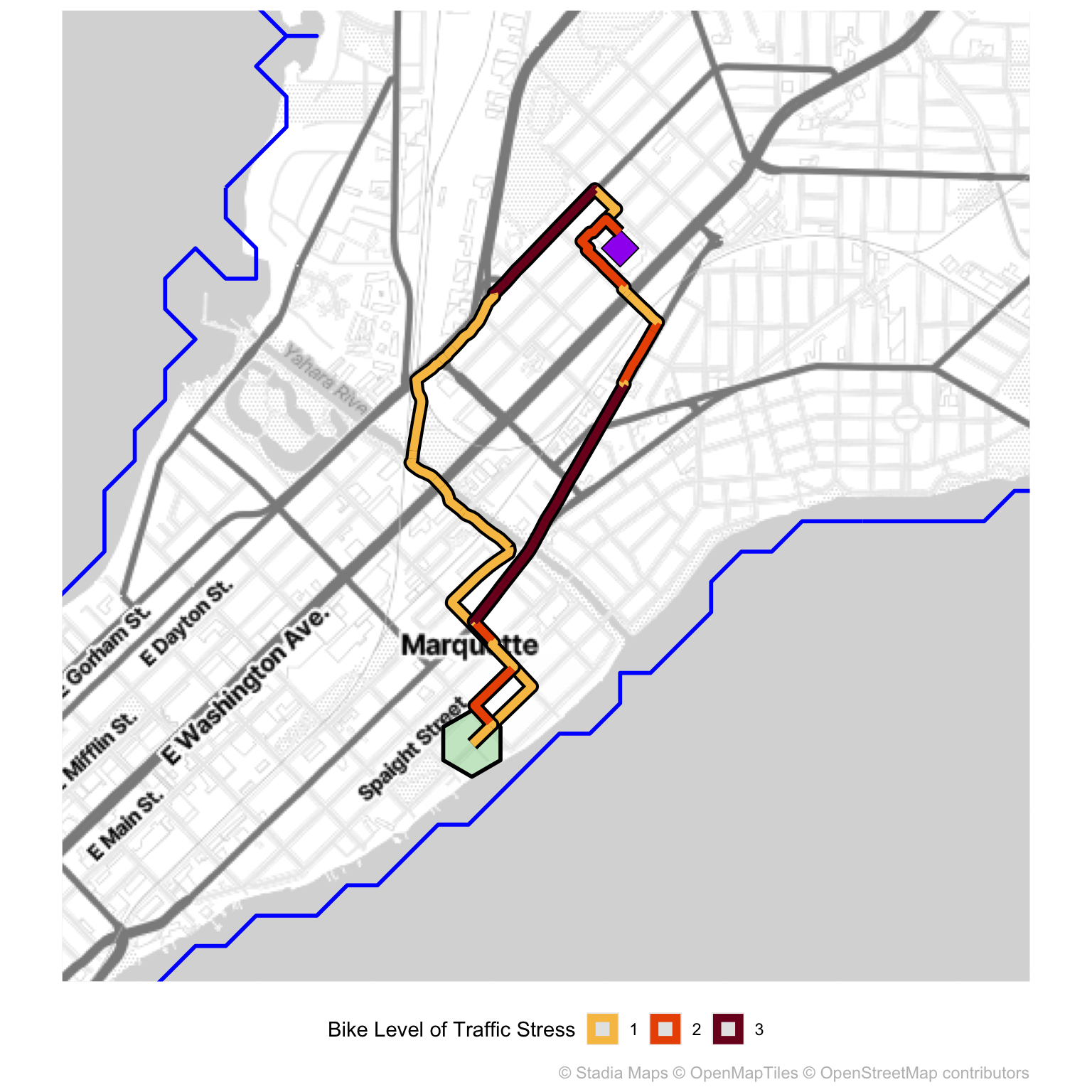
- Bike Level of Traffic Stress classification w/ BrokenSpoke Analyzer
- BrokenSpoke Analyzer powers the People for Bikes Bicycle Network Analysis
- Classifies segments and intersections into high stress or low stress
- Based on number of lanes, posted speed limit, type of bike lanes, signals, etc.
Aggregate routes
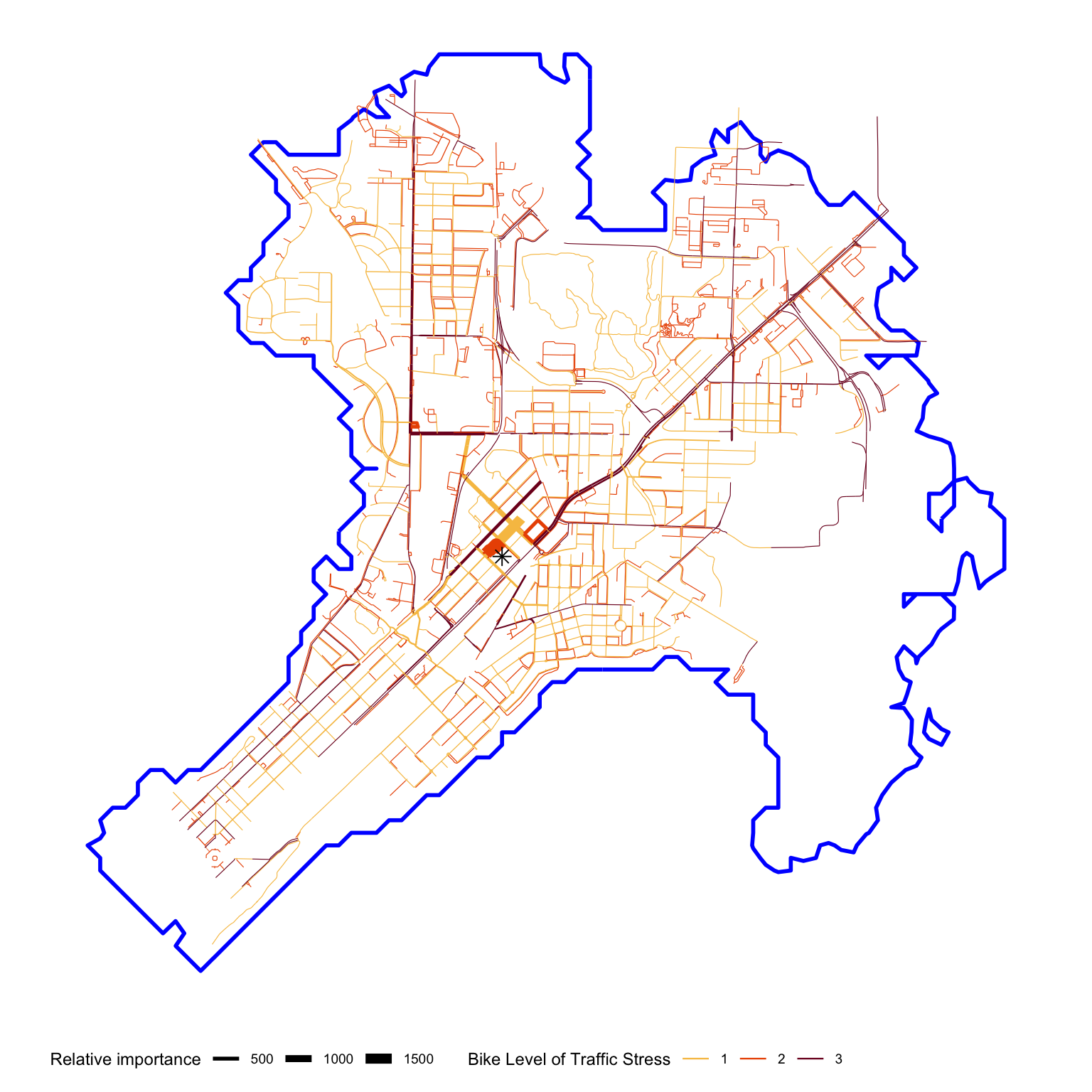
- Prioritizing limited resources to best help kids bike to school.
- Which streets are the biggest barriers to the most students?
Aggregate across schools & district
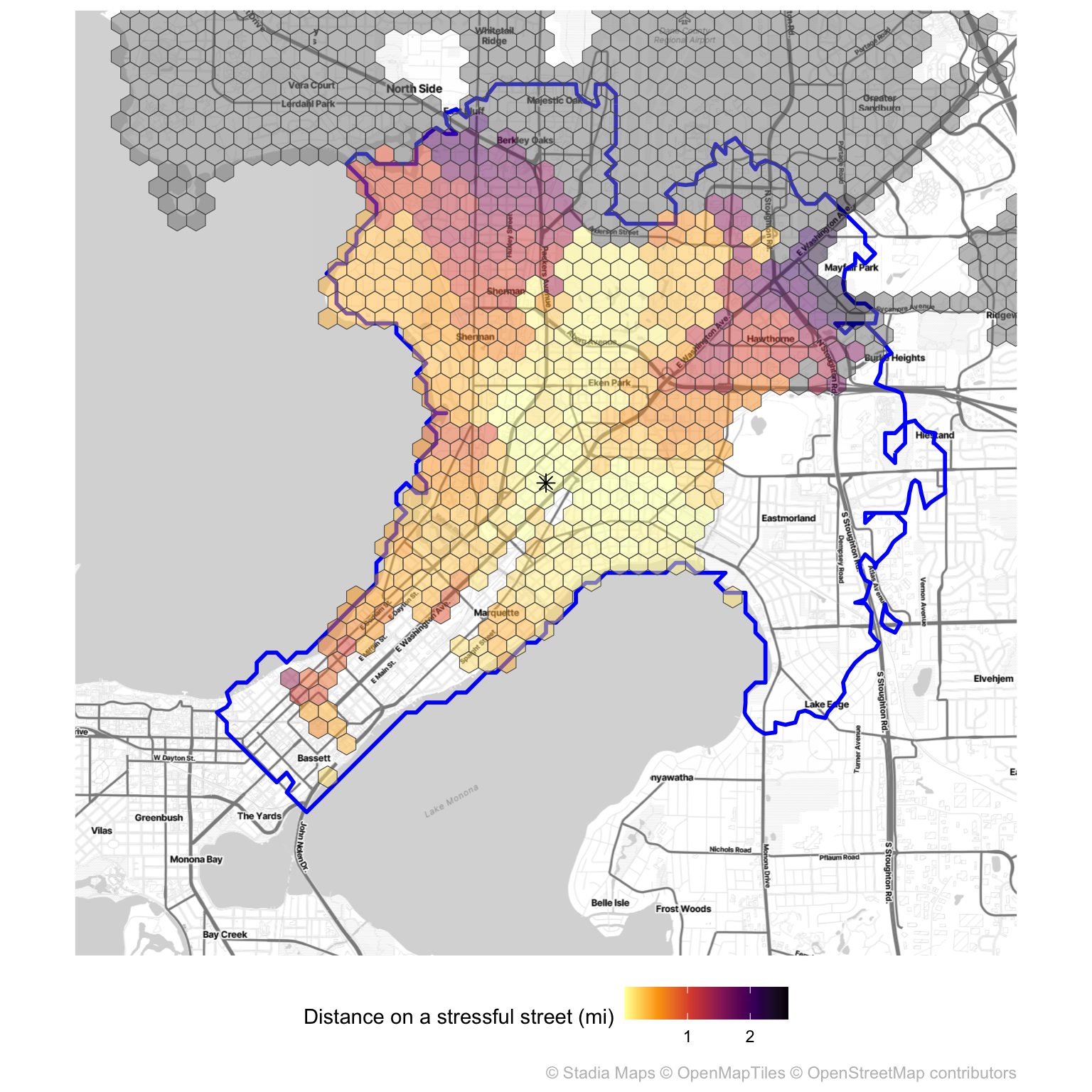
- In which neighborhoods is biking to school the most dangerous?
- Can guide building new schools and housing density
Aggregate across schools & district
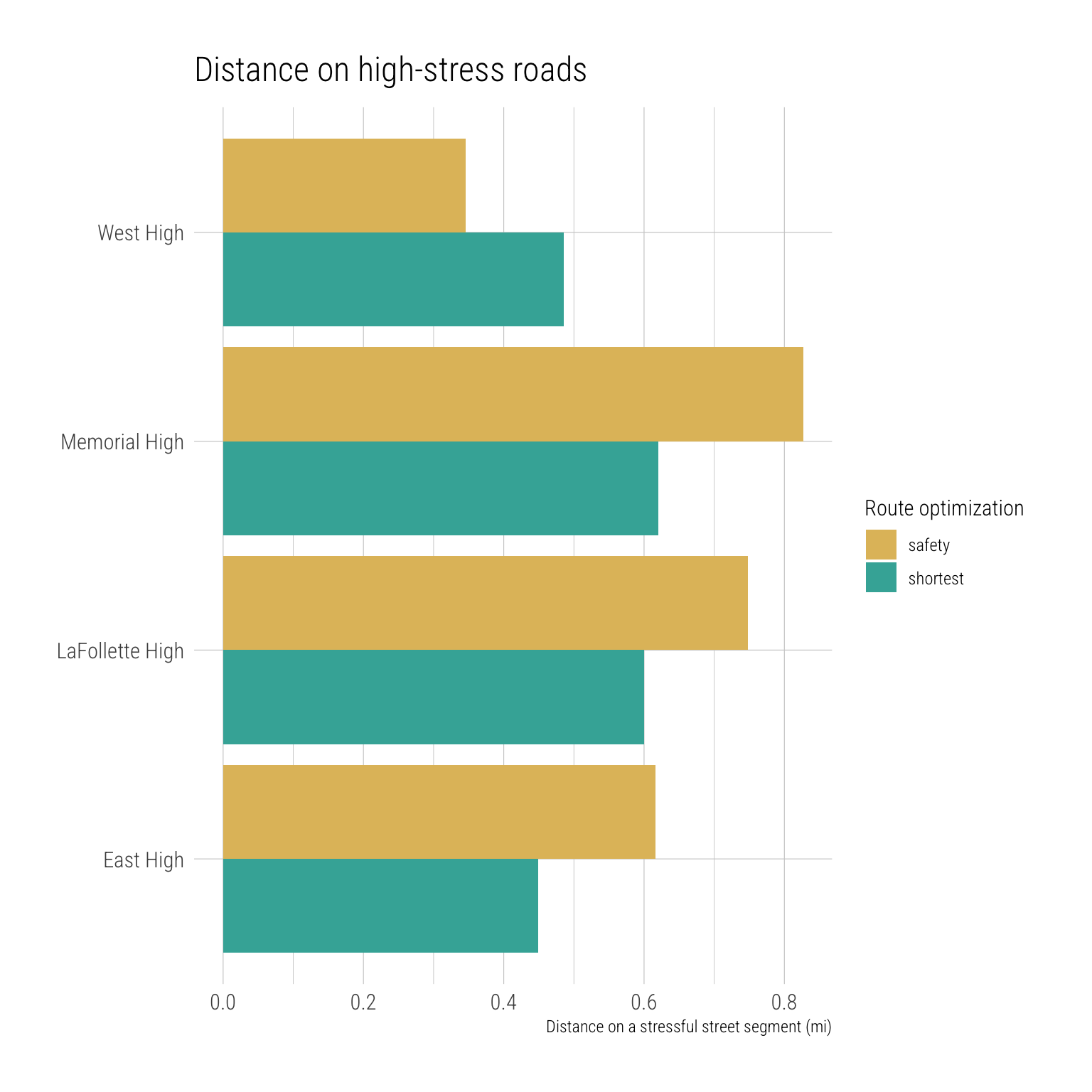
- Prioritize education and encouragement efforts.
- Which schools have high bike potential?
- How does bikability relate to other social characteristics?
What-if analysis
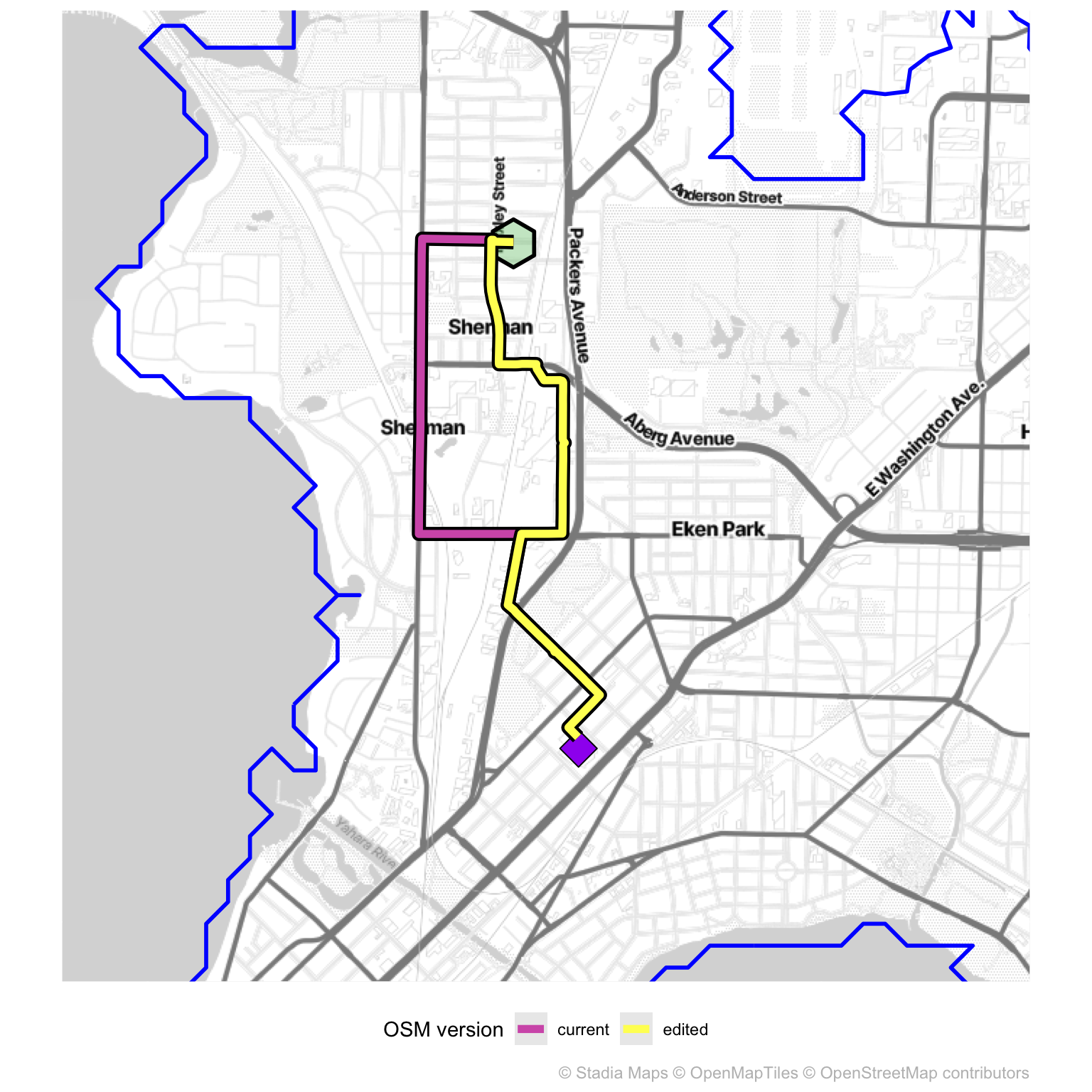
- Routing is done locally using an .osm.pbf file, editable!
- Using osmChange files, looking for better workflow
- How many students will be impacted by a change?
- Focus groups with high school students to identify barriers
Acknowledgments
This research was funded through a pilot grant from the Center for Health, Energy, and Environmental Research (CHEER; NIH grant #1P20ES036747-01). We thank all the high school students involved in the project for their contributions!

Talk to us!
Reach out:
- kliems@wisc.edu
- ben@wisconsinbikefed.org
- syounkin@wisc.edu